Biomass to Biofuels: Strategies for Global Industries

Biomass to Biofuels: Strategies for Global Industries

Bio Fuels Facts

Focusing on the key challenges that still impede the realization of the billion-ton renewable fuels vision, this book integrates technological development and business development rationales to highlight the key technological.developments that are necessary to industrialize biofuels on a global scale. Technological issues addressed in this work include fermentation and downstream processing technologies, as compared to current industrial practice and process economics. Business issues that provide the lens through which the technological review is performed span the entire biofuel value chain, from financial mechanisms to fund biotechnology start-ups in the biofuel arena up to large green field manufacturing projects, to raw material farming, collection and transport to the bioconversion plant, manufacturing, product recovery, storage, and transport to the point of sale. Emphasis has been placed throughout the book on providing a global view that takes into account the intrinsic characteristics of various biofuels markets from Brazil, the EU, the US, or Japan, to emerging economies as agricultural development and biofuel development appear undissociably linked.

List Price: $ 90.00

Price: [wpramaprice asin=”0470513128″]

Homemade Biodiesel fuel for your vehicle

Article by Allan Michael Taylor

If you’ve been on the road for a period of time, you may have discovered that the fuel costs is eating an enormous portion of your monthly income. Won’t it be ideal if you can on the gas that you are using now? Well, the good news is that you can. What you need is to try out Homemade Biodiesel.

Understanding Biodiesel

Let us start with the question, what’s Biodiesel? Biodiesel is an alternative fuel that burns with little residual. is derived from plant oil. It’s a non-petroleum based diesel fuel. Do not be confused, it’s not not the same as straight vegetable oil (SVO).

Biodiesel is sold commercially and is found in lots ot gas kiosks in USA. The price isn’t fixed but it is understood to be cheaper than the standard petrol costs.

Main benefactor of Biodiesel

Most economic autos that use diesel can find that Biodiesel is more economical. Business owners who owns a fleet of diesel-powered vehicles should weigh trying out Biodiesel as it may enable them to lower the overall expenses.

How about home users?

Will folk like you and me benefit from it? You can benefit from it by using Homemade Biodiesel. It is feasible to create your own Biodiesel at our own basement, just by converting unwanted plant oil. There are 2 ways to do it: You can buy a Biodiesel processor to process Homemade Biodiesel with ease. Oor you can handle Biodiesel manually by youself. Not to fret, it’s not hard to build your own Homemade Biodiesel. The method is just more hands-on and takes slightly longer time.

I would suggest that you begin with hands-on approach of creating Homemade Biodiesel, try it in your car. When it is proven to work out for your auto you can then consider buying a Biodiesel Processer. The reason is that a Biodiesel Processor tends to be quite pricey and you will not need to gamble away cash on it first.


You can make biodiesel at home now! Visit us and find out how to create your own.


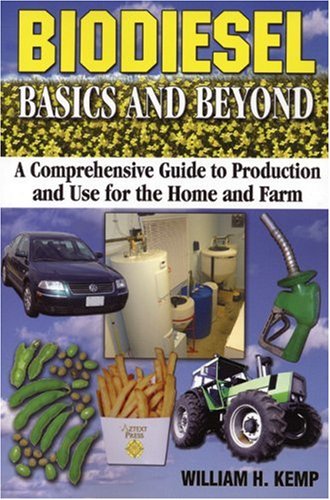
Biodiesel Basics and Beyond: A Comprehensive Guide to Production and Use for the Home and Farm

Biodiesel Basics and Beyond: A Comprehensive Guide to Production and Use for the Home and Farm

Bio Fuels Facts

  • guide to numerous reference materials
  • 300 pages, paperback
  • separate fact from fiction
  • educate potential home, farm, and cooperative
  • Comprehensive Guide

Biodiesel Basics and Beyondaims to separate fact from fiction and to educate potential home, farm, and cooperative manufacturers on the economic production of quality biodiesel from both waste and virgin oil feedstock. The book includes:

  • detailed processes and equipment required to produce biodiesel fuel that meets North American standards
  • how farmers can use excess oilseed as a feedstock for biodiesel production
  • the use of the co-byproduct glycerin in the making of soap
  • a guide to numerous reference materials and a list of supplier data

This is North America’s definitive guide to responsibly producing biodiesel from waste vegetable oil while minimizing your environmental footprint in the process.


List Price: $ 29.95

Price: [wpramaprice asin=”0973323337″]

Duck Weed: The BioFuel Revolution

~~~~~~~~~~~~ bigthink.com ~~~~~~~~~~~~ There has been growing interest in finding ‘second generation’ alternatives to food crops that “don’t grow on arable land and instead can be used specifically for bio fuels,” says Professor Rob Martienssen of the Cold Spring Harbor Laboratory in Laurel Hollow, New York. One promising candidate is a “superweed” called duckweed, the smallest flowering plant in the world. “We’re interested in using or optimizing duckweed for use as a biomass bio fuel based on its ability to grow on waste water and water in places which you would never imagine crops would grow,” Martienssen tells Big Think. In other words, Martienssen calls duckweed “an exciting prospect” because it can kill two birds with one stone. “It can convert high nitrogen and high phosphorus water into much cleaner water and at the same time massively increase in biomass,” Martienssen says. Duckweed doubles in size every two days, generating a huge amount of biomass in a short amount of time, and is an amazing producer of starch. Therefore, using pathways and genes from algae, Martienssen says he is looking to “persuade” duckweed “to make oil instead of starch.” Directed / Produced by Jonathan Fowler & Elizabeth Rodd